
Why Creative Thinking Matters More Than Ever
Your child’s imagination isn’t just adorable when they’re pretending the lounge is a pirate ship. It’s actually building the neural pathways they’ll need to solve problems, innovate, and thrive in a world that hasn’t been invented yet. Creative thinking in children develops the skills that help them navigate uncertainty, generate original solutions, and believe they can tackle whatever comes their way.
Recent research shows imagination functions as resilience, cultivating hope and possibilities that fuel persistence and problem-solving. When children learn to think creatively, they’re not just entertaining themselves. They’re developing the confidence to believe they’re incredible, which shapes how they approach every challenge throughout their lives.
The Science Behind Imaginative Development
When Creative Thinking Takes Flight
The middle school years represent the most rapid developmental period for imagination and thinking skills. During these years, intentional imagination becomes dominant, and creative thinking increasingly takes centre stage. But the foundation for this growth starts much earlier, in those precious years between ages one and nine when young minds are remarkably receptive to new experiences.
Global institutions recognise this potential. UNESCO’s 2026 ICT in Education Prize specifically honours projects that strengthen creativity, imagination, and critical thinking, whilst the OECD has confirmed that creative thinking skills can be taught in schools. Even PISA 2022 measured 15-year-old students’ creative thinking for the first time, defining it as the capacity to produce diverse and original ideas.
Imagination as Resilience
When children engage in imaginative play, they’re not escaping reality. They’re rehearsing for it. Imagination builds resilience by allowing kids to explore possibilities, experiment with solutions, and develop the persistence needed when initial attempts don’t work. This isn’t just theory. It’s the difference between a child who gives up when something’s difficult and one who thinks, “What if I tried it this way instead?”
Creating Space for Imaginative Play
Nature as the Ultimate Creativity Lab
Outdoors, children develop their brains through imaginative, whole-body experiences that research links to higher cognitive function. A stick becomes a wand, a sword, a conductor’s baton, or a fishing rod depending on the story unfolding in their minds. This kind of open-ended play, where objects have multiple possibilities, strengthens creative development in ways that single-purpose toys simply can’t match.
Nature doesn’t come with instructions, which makes it perfect for innovation. Children must imagine how to build the fort, cross the stream, or create the fairy garden. Every outdoor adventure becomes an exercise in creative problem-solving.
The Power of Unstructured Time
Boredom gets a bad reputation, but it’s actually imagination’s best friend. When children aren’t entertained by screens or scheduled activities, their minds naturally drift toward creative thinking. That’s when they start building elaborate cardboard cities, creating complex imaginary worlds, or inventing games with their own rules.
Your role isn’t to fill every moment with structured activities. Sometimes the most valuable thing you can offer is space, time, and a few simple materials that spark possibilities rather than dictating outcomes.
Stories That Spark Innovation
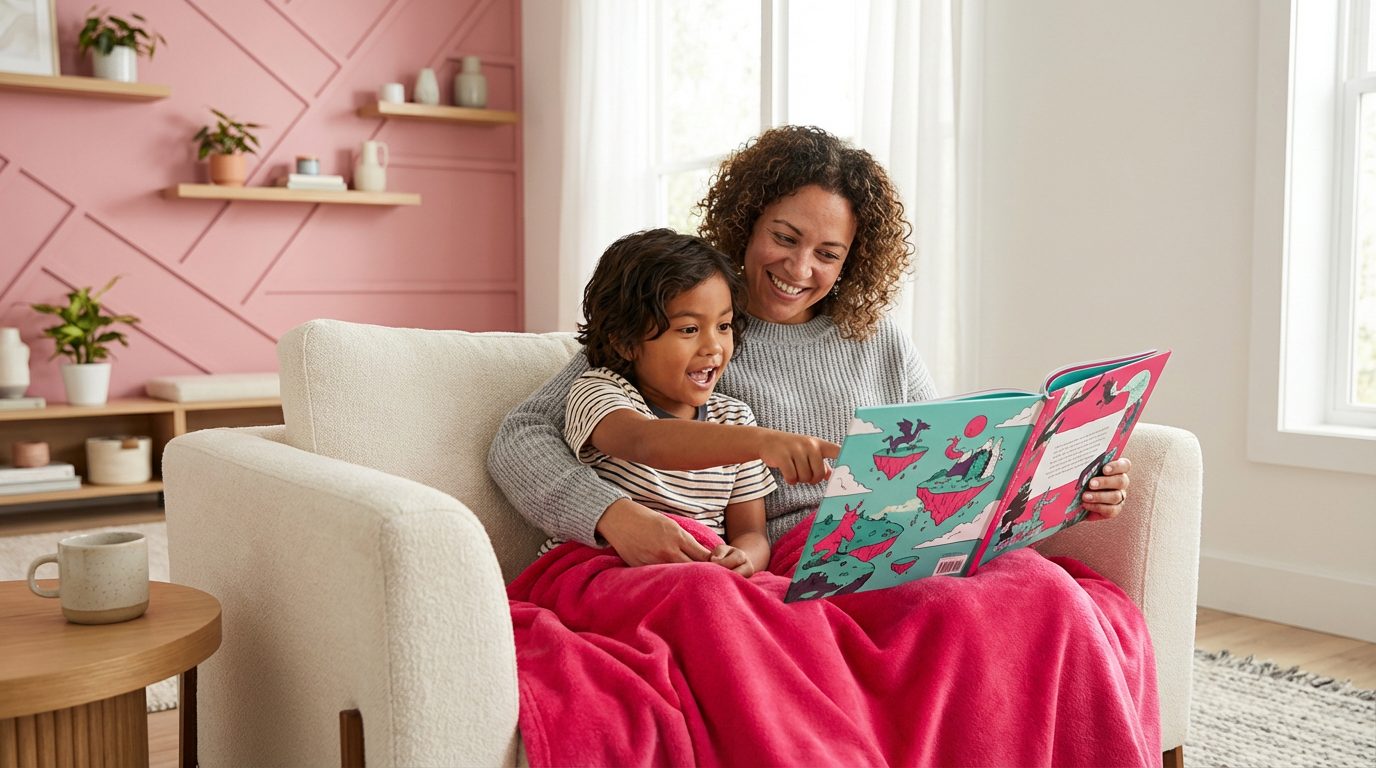
Books offer something magical for creative development. They transport children to worlds that don’t exist, introduce them to possibilities they haven’t encountered, and show them characters who solve problems in inventive ways. When a child sees themselves as the hero of an adventure, whether through personalised stories or by identifying with characters, they’re building the neural pathways that connect imagination to action.
Secretly educational and totally inspirational stories kids love serve double duty. Children think they’re simply enjoying an adventure, whilst parents know they’re absorbing lessons about persistence, creativity, and self-belief. The best stories don’t just entertain. They inspire children to believe they can be innovators, problem-solvers, and heroes in their own lives.
Practical Strategies for Creative Development
The Five-Stage Creative Process for Kids
Creative thinking follows a pattern, even in young minds. The five-stage creative process offers a framework you can use at home:
- Preparation: Expose children to new experiences, ideas, and materials
- Incubation: Allow time for ideas to percolate without pressure
- Illumination: Celebrate those “aha!” moments when inspiration strikes
- Evaluation: Help children refine their ideas through gentle questions
- Implementation: Support them in bringing their creative visions to life
This process might look like collecting interesting objects on a nature walk (preparation), letting them sit in a special box for a while (incubation), suddenly deciding to create a museum display (illumination), arranging and rearranging the items (evaluation), and proudly presenting the finished exhibition to family members (implementation).
Building Visual Thinking Skills
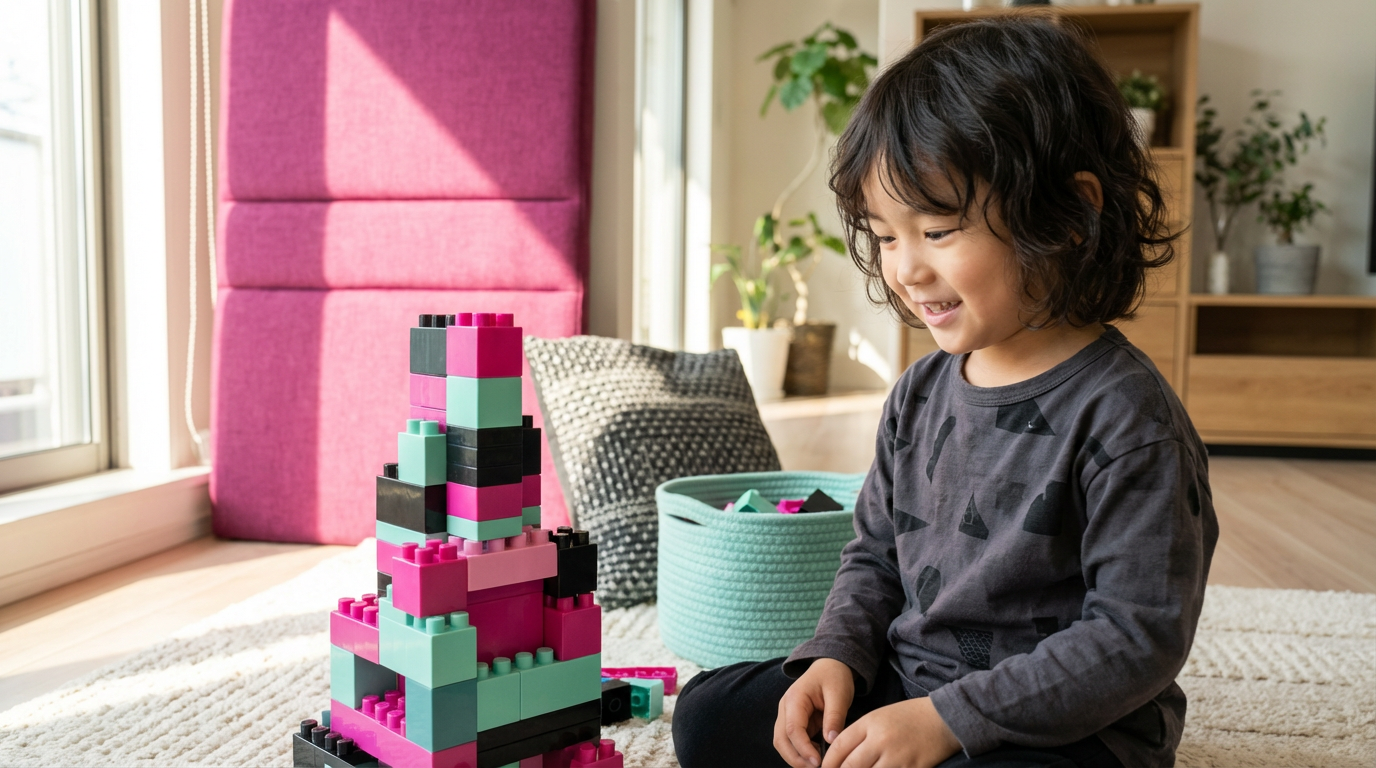
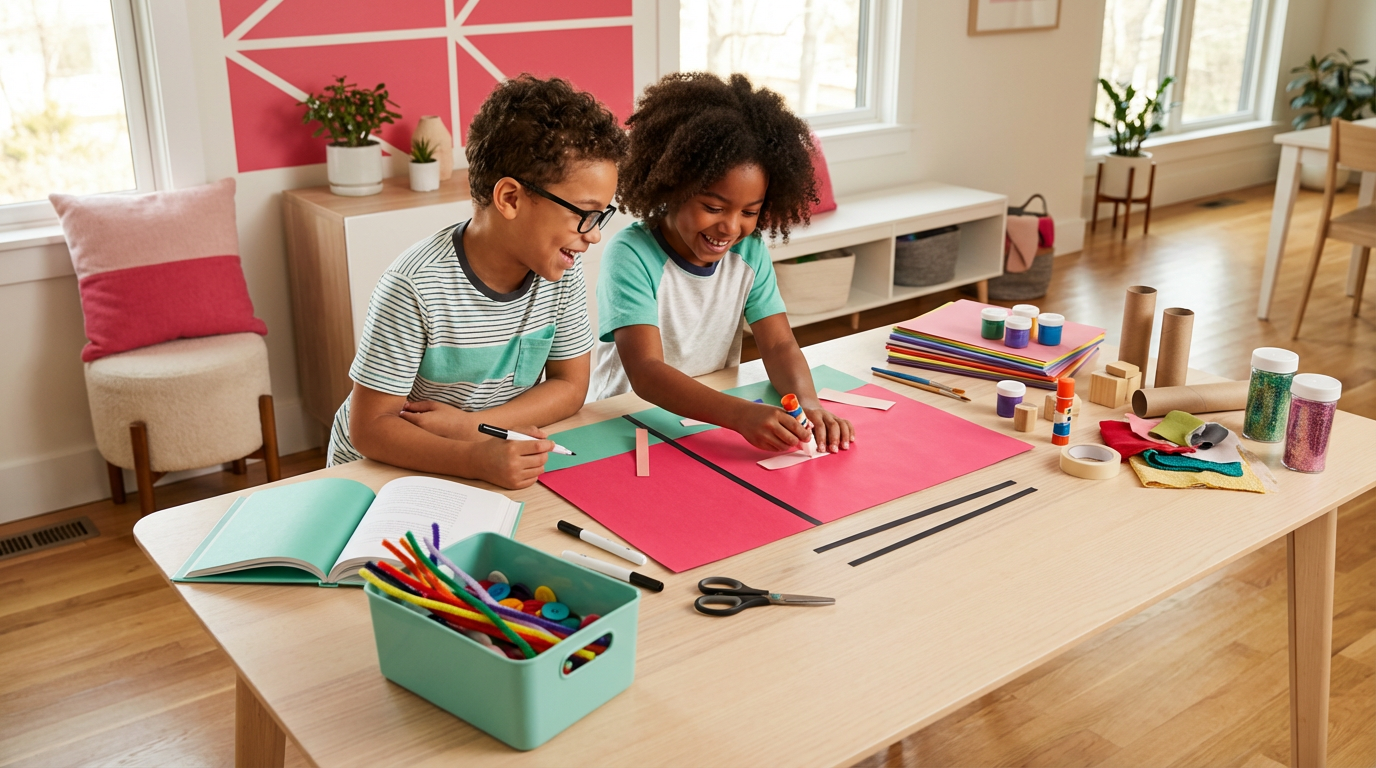
Children often think in pictures before they think in words. Encouraging them to draw, build, sculpt, and construct helps develop visual thinking that supports creative problem-solving. When a child builds a three-dimensional model of their idea, whether with blocks, craft materials, or even that LEGO collection, they’re expressing concepts that words can’t quite capture yet.
This visual thinking becomes increasingly valuable as children grow. It’s the foundation for design thinking, spatial reasoning, and the kind of innovative approaches that lead to breakthrough solutions.
Encouraging Divergent Thinking at Home
Divergent thinking is the ability to generate multiple solutions to a single problem. It’s what happens when you ask, “How many different ways could we use this cardboard box?” and your child comes up with seventeen creative answers. Training programmes focused on producing ideas and understanding creative process work remarkably well at improving this skill.
Try these approaches to strengthen divergent thinking:
- Ask open-ended questions that have multiple right answers
- Celebrate unusual solutions rather than only rewarding conventional thinking
- Model creative thinking by sharing your own brainstorming process
- Provide materials that can be used in countless ways
- Resist the urge to correct or redirect when their ideas seem impractical
When children learn that problems have multiple solutions and that their creative ideas have value, they develop the confidence to keep generating new possibilities.
From Imagination to Action
The ultimate goal isn’t just to raise children who can imagine wonderful things. It’s to inspire little heroes who believe they can turn their creative visions into reality. This transformation from imaginative thinking to confident action happens when children experience the complete creative cycle: having an idea, developing it, facing obstacles, problem-solving, and seeing their creation come to life.
Every child deserves to see themselves as the hero of their own story and believe they are incredible. When you nurture creative thinking and imaginative play, you’re not just filling time. You’re building the foundation for innovation, resilience, and the self-belief that will carry them through every challenge they’ll face.
Books made with depth and passion can be part of this journey, offering adventures where children see themselves as capable heroes whilst secretly building the creative thinking skills they’ll use throughout their lives. Because truly lovely things take more time, and raising creative, confident young innovators is perhaps the loveliest thing of all.
Ready to inspire the little hero in your life? Explore personalised stories that make your child the star of educational adventures they’ll treasure forever. Visit The Kids Book Company and discover how the right book can spark imagination, build confidence, and show your child they’re capable of incredible things.
Frequently Asked Questions
At what age should I start focusing on creative development?
Creative development begins in infancy and continues through adolescence, but the years between ages one and nine are particularly important for building foundational creative thinking skills. The middle school years show the most rapid development of imagination and creative thinking, but the habits and confidence built in early childhood create the foundation for this growth. Start encouraging imaginative play, storytelling, and creative problem-solving as early as possible.
How much screen time is appropriate if I want to nurture creativity?
Whilst some educational content can support learning, excessive screen time reduces opportunities for the unstructured play, hands-on exploration, and imaginative thinking that build creative development. Research shows that nature-based play and whole-body experiences develop cognitive function more effectively than passive screen time. Balance is key. Prioritise activities that require children to generate their own ideas, create their own solutions, and use their imagination actively rather than consuming pre-packaged entertainment.
What if my child seems more interested in facts than imagination?
Children have different strengths and interests, and a love of facts doesn’t exclude creative thinking. Many innovations come from applying imagination to factual knowledge. Encourage your fact-loving child to use their knowledge creatively by asking questions like “What would happen if…?” or “How could we solve this problem using what you know about…?” Creative thinking isn’t only about fantasy. It’s about generating original solutions and making unexpected connections, which fact-oriented children can excel at when given opportunities.
How can books support creative development?
Books expose children to possibilities beyond their immediate experience, introduce creative problem-solving through characters’ actions, and spark imagination by presenting worlds that don’t exist. Personalised stories where children see themselves as heroes particularly strengthen the connection between imagination and self-belief. When children identify with characters who solve problems creatively, they internalise the message that they too can be innovative thinkers. Stories that are secretly educational whilst totally engaging teach creative thinking skills without feeling like instruction.
What’s the difference between creativity and imagination?
Imagination is the ability to form mental images and concepts that aren’t present to the senses. Creativity is the ability to generate original ideas and solutions, often by using imagination in practical ways. Think of imagination as the raw material and creativity as what you build with it. Both skills can be cultivated through practice, exposure to new experiences, and encouragement. Children need opportunities to develop both: imagination through play and stories, and creativity through problem-solving and making their ideas real.