What Are the Key Literacy Development Stages (Ages 1-9)
Literacy development stages aren’t just about when your child learns to read words on a page. They represent a remarkable journey from babbling babies to confident readers who see themselves as heroes of their own stories. Understanding these stages helps you recognise where your child is thriving and where they might need extra support.
The stages of literacy development in children follow a predictable yet flexible pattern. Each child moves through emergent literacy (birth to age 3), early literacy (ages 3-5), transitional reading (ages 5-7), and fluent reading (ages 7-9 and beyond) at their own pace. These aren’t rigid checkpoints but flowing phases where skills build upon one another like chapters in an adventure story.
Here’s what makes this journey special: you’re not just teaching reading skills. You’re inspiring little heroes one personalised book at a time, building the foundation for self-belief, critical thinking, and lifelong learning.
Emergent Literacy: Building Foundations from Birth to Age 3
What is emergent literacy and why does it matter
Emergent literacy is where the magic begins, long before your toddler recognises a single letter. This stage encompasses all the experiences, skills, and knowledge children gain about reading and writing before formal instruction starts. Your baby’s brain is absorbing language patterns, building vocabulary, and understanding that symbols carry meaning.
Think of emergent literacy as the roots of a mighty tree. What happens during these first three years determines how strong and deep those roots grow. Children develop oral language skills, learn to love books, and begin understanding that stories have structure and meaning.
Key milestones in the emergent literacy stage
Between birth and age 3, watch for these early literacy milestones:
- Responds to familiar voices and enjoys songs and rhymes (0-12 months)
- Points to pictures in books and turns pages (12-18 months)
- Pretends to read favourite books and recognises familiar covers (18-24 months)
- Recites parts of well-known stories and asks questions about pictures (24-36 months)
- Shows interest in print and may recognise familiar logos or signs (30-36 months)
Your little one isn’t just playing when they babble or point at pictures. They’re building the neural pathways that will support all future learning. These moments matter enormously.
Early Literacy Skills: What to Expect Ages 3-5
What literacy skills should my 5 year old have
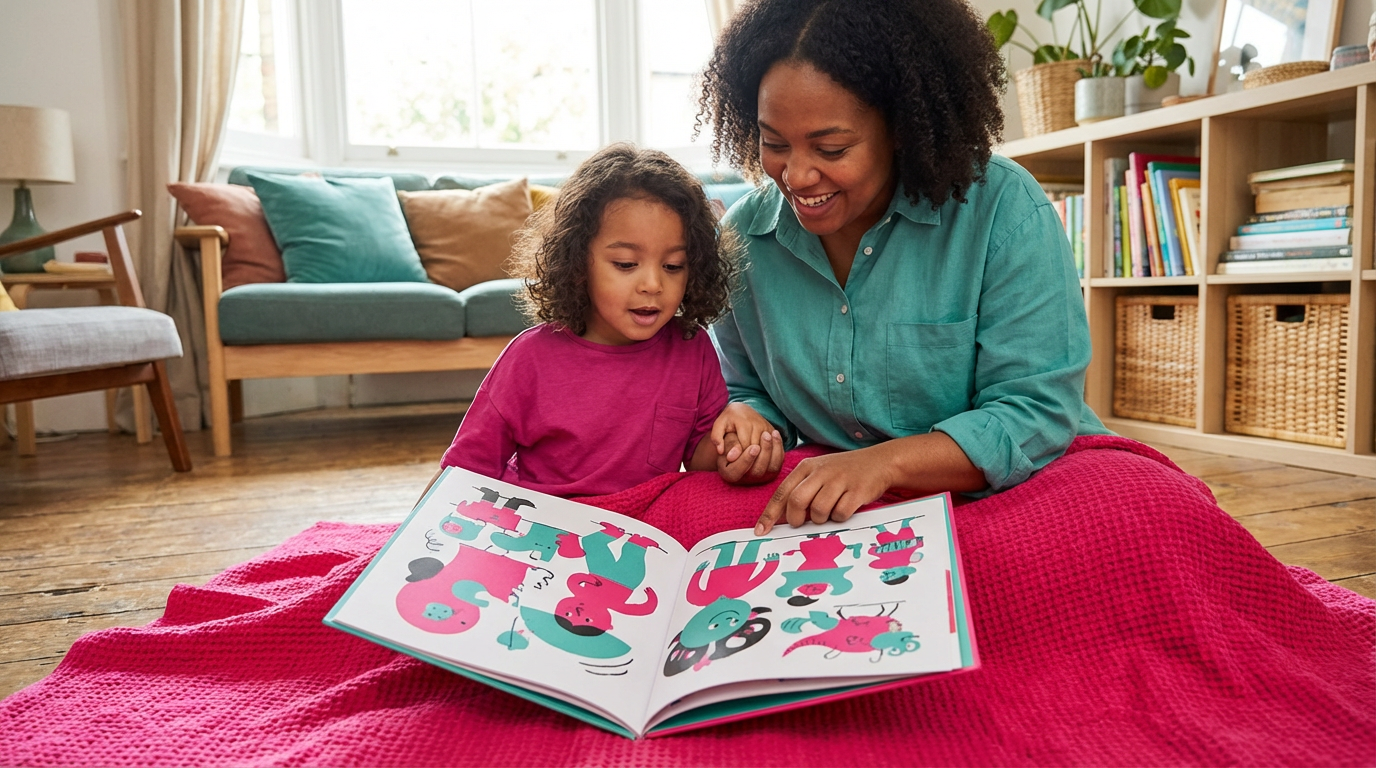
The preschool years bring exciting leaps in child reading development. By age 5, most children demonstrate several critical pre-reading abilities that signal readiness for formal instruction.
Your 5-year-old should typically:
- Recognise and name most letters of the alphabet
- Understand that print carries meaning and flows from left to right
- Identify rhyming words and beginning sounds in familiar words
- Retell simple stories in sequence
- Write their own name and recognise it in print
- Show interest in attempting to read environmental print
Remember, these are general markers along reading stages by age. Children develop at different rates, and that’s perfectly normal. The goal isn’t to rush but to nurture genuine curiosity and confidence.
Print awareness and phonological development
Two crucial skills emerge during early literacy: print awareness and phonological awareness. Print awareness means understanding how books work (reading top to bottom, left to right, spaces between words). Phonological awareness involves hearing and playing with sounds in language.
Teaching children to read starts with making these invisible concepts visible through playful exploration. Rhyming games, alliteration activities, and simply pointing to words while reading aloud all contribute to literacy skills by age.
Transitional Reading Stage: Decoding Skills Ages 5-7
When should my child start reading independently
This question keeps many parents awake at night. The truth is there’s no single perfect age. Most children begin decoding simple words between ages 5 and 7, but the journey looks different for everyone.
What matters more than the exact timing is that children feel supported rather than pressured. Reading readiness indicators include letter recognition, phonemic awareness, and genuine interest in trying to decode words. When your child starts sounding out simple words like “cat” or “dog,” they’re entering the transitional stage.
This phase is characterised by:
- Sounding out unfamiliar words using letter-sound relationships
- Recognising an increasing number of sight words automatically
- Reading simple sentences with growing fluency
- Self-correcting when reading doesn’t make sense
Supporting the decoding process
Decoding can feel frustrating for young readers. They’re working incredibly hard to connect symbols with sounds whilst simultaneously trying to comprehend meaning. Your patience and encouragement during this stage shape whether your child sees themselves as capable or struggles with confidence.
Choose books that are secretly educational and totally inspirational, matching their current skill level whilst gently stretching their abilities. Celebrate effort over perfection, and make reading together a treasured part of your daily routine.
Fluent Reading and Comprehension: Ages 7-9 and Beyond
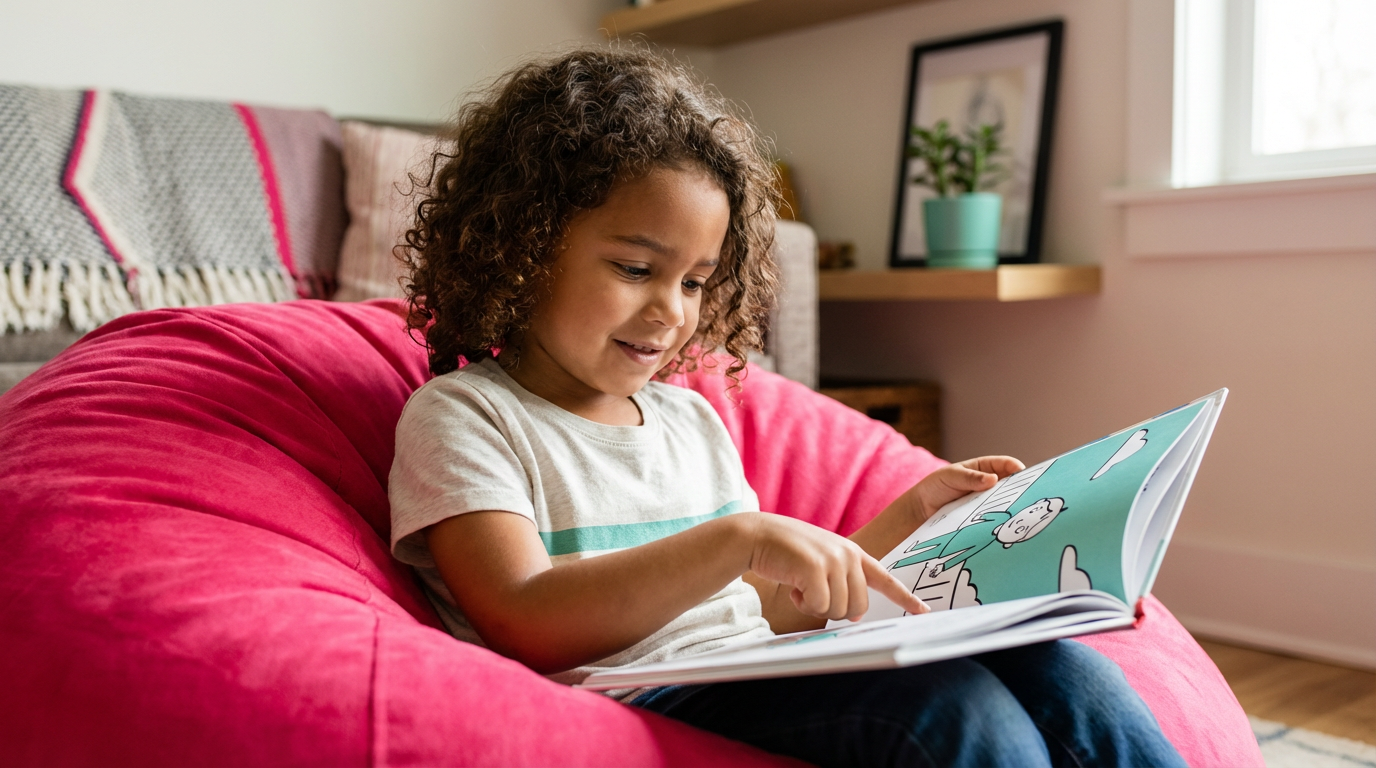
By ages 7-9, children transition from learning to read to reading to learn. Fluency develops as decoding becomes automatic, freeing up mental energy for comprehension and critical thinking. Your child begins reading longer chapter books, understanding more complex plots, and making inferences.
Fluent readers demonstrate:
- Smooth, expressive reading with appropriate pacing
- Strong comprehension of age-appropriate texts
- Ability to summarise and predict story outcomes
- Growing vocabulary through independent reading
- Interest in specific genres or topics
This stage is where reading becomes a gateway to infinite worlds. Children who believe they’re incredible readers explore topics that fascinate them, develop empathy through diverse characters, and build knowledge independently.
Why Parental Involvement is the #1 Predictor of Reading Success
How do parents help with early literacy
Research consistently shows that parental involvement in literacy development trumps socioeconomic status, classroom resources, and even innate ability as the strongest predictor of reading achievement. Your engagement matters more than you might realise.
Parent literacy education doesn’t require special training. What children need most is:
- Regular read-aloud time, even after they can read independently
- Conversations about books, characters, and ideas
- A home where reading is valued and modelled
- Access to diverse, high-quality books
- Encouragement that builds confidence and resilience
When you read to your child, you’re doing far more than sharing a story. You’re demonstrating that reading is valuable, building their vocabulary, teaching story structure, and creating emotional connections that make literacy meaningful.
Age-Appropriate Literacy Activities Parents Can Do at Home
How to support literacy development at home for ages 1-3
Early literacy activities for the youngest learners centre on joyful exploration:
- Read aloud daily, using expressive voices and pointing to pictures
- Sing nursery rhymes and make up silly songs together
- Let your child handle board books and turn pages
- Talk constantly about what you’re doing, seeing, and experiencing
- Visit the library to choose books together
Early literacy activities for ages 3-5
Preschoolers thrive with activities that feel like play:
- Play letter recognition games with magnetic letters or alphabet puzzles
- Encourage drawing and early writing attempts
- Read predictable books with repeating phrases your child can “read” along
- Create rhyming word families during car rides
- Write your child’s dictated stories and read them back together
Reading activities for ages 5-9
School-age children benefit from activities that challenge whilst building confidence:
- Take turns reading pages in books slightly above their independent level
- Discuss books as you would with a friend, asking genuine questions
- Encourage journal writing or creative storytelling
- Visit bookshops and let your child choose books that excite them
- Share personalised books where they’re the hero of educational adventures

Creating a Home Literacy Environment That Nurtures Lifelong Learners
The physical and emotional environment in your home profoundly influences literacy development. A literacy-rich environment doesn’t require expensive materials, just intentional choices.
Create spaces where books are accessible and inviting. A cosy reading corner with cushions, good lighting, and a rotating selection of age-appropriate books signals that reading matters in your family. Display books with covers facing out to spark interest.
Model reading yourself. Children who see parents reading for pleasure and information naturally value literacy. Talk about what you’re reading, share interesting facts you’ve learned, and demonstrate that reading is a lifelong adventure.
Most importantly, make literacy experiences positive and pressure-free. Books made with depth and passion, like personalised stories where your child is the hero, combine education with genuine enjoyment. When children associate reading with feeling incredible about themselves, you’ve given them a gift that lasts far beyond childhood.
The journey through literacy development stages is one of the most important adventures you’ll guide your child through. With your support, patience, and the right resources, you’re not just teaching reading skills. You’re inspiring and empowering self-belief in your kids, showing them they’re capable of anything, including becoming passionate readers who love learning.
Ready to make your child the hero of their own reading adventure? Explore our range of secretly educational, totally inspirational personalised books designed to build literacy skills whilst nurturing the confidence that they’re absolutely incredible.
Frequently Asked Questions
What are the main stages of literacy development in children?
The main literacy development stages are emergent literacy (birth to age 3), early literacy (ages 3-5), transitional or decoding literacy (ages 5-7), and fluent reading with comprehension (ages 7-9 and beyond). Each stage builds upon the previous one, though children progress at individual rates.
When should my child start reading independently?
Most children begin reading simple words independently between ages 5 and 7, though timing varies significantly. Focus on reading readiness indicators like letter recognition and phonemic awareness rather than a specific age. Support and encouragement matter more than rushing the timeline.
How can I support my child’s literacy development at home?
Read aloud daily, engage in conversations about books, create a print-rich environment, play with language through rhymes and songs, and model reading yourself. Choose age-appropriate activities and books that match your child’s developmental stage whilst gently challenging their growing skills.
What literacy skills should my 5-year-old have?
By age 5, most children recognise and name most letters, understand that print carries meaning, identify rhyming words and beginning sounds, retell simple stories, write their own name, and show interest in reading environmental print. These are general markers, and variation is completely normal.
Why is parental involvement so important for literacy development?
Research shows parental involvement is the strongest predictor of reading success, surpassing socioeconomic factors and classroom resources. Regular read-aloud time, conversations about books, modelling reading behaviour, and creating a literacy-rich home environment profoundly impact children’s language and reading development.
What is emergent literacy and when does it begin?
Emergent literacy encompasses all experiences and skills children develop about reading and writing before formal instruction, beginning from birth. This includes oral language development, understanding that symbols carry meaning, enjoying books, and recognising that print has purpose. These foundations are critical for later reading success.