

Grandparents who live far away stay close through routine, with the same call time every week, a story shared on screen and post that asks for a reply. Choose a call time that works on both clocks and give every call something to do, so you’re part of their ordinary week as well as their birthdays.
We make personalised books, though only a small part of this page is about them. If it’s a present you’re after, the far-away section of our Christmas gifts for grandchildren guide has ideas, and sending a Christmas present to Australia covers the customs form. This page is about the weeks in between, when there’s nothing to unwrap.
The short version
- Fix a call time that works in both time zones, and stick to it.
- Give every call one job, like a story, a game or a show-and-tell.
- Read a picture book on the call, held where they can see the pictures.
- Post things that ask for something back.
- Share one thing across the distance, like the Moon or the weather.
- Ask the parents what works for them, and fit around it.
Find a call time that works on both clocks
You’ll need the time difference for this part of the year, then a slot that’s breakfast or early evening at their end and a sensible hour at yours. The gap moves, because the UK and most of Australia and New Zealand change their clocks on different Sundays, in opposite directions.

GOV.UK puts the UK’s changes on the last Sunday in March (forward) and the last Sunday in October (back). Here’s how far ahead of the UK each place is through the year:
- New South Wales, Victoria, Tasmania and the ACT: 11 hours from late October to late March, 9 hours from early April to early October, and 10 hours in the few weeks between.
- South Australia: half an hour less than New South Wales all year, because it changes its clocks on the same days.
- Queensland: 10 hours from late October to late March and 9 the rest of the year, because Queensland doesn’t change its clocks.
- Northern Territory: half an hour less than Queensland, and it doesn’t change its clocks either.
- Western Australia: 8 hours from late October to late March and 7 for the rest of the year, with no clock changes.
- New Zealand: 13 hours from late October to late March, 11 hours from early April to late September, and 12 in the weeks between.
We worked those out from the NSW Government’s guide to Australian time zones and its clock-change dates, and from New Zealand’s daylight saving dates.
So here’s what that means for a 6.30pm story at your grandchild’s end. In Melbourne, that’s 7.30am in the UK in January and 9.30am in July, so you can read it over your breakfast. Auckland’s harder. The same story lands at 5.30am in the UK in January, which is early by anyone’s standards. A weekend breakfast call works better there: in January, 8am on Saturday in Auckland is 7pm on Friday in the UK.
If you’re the one in Australia or New Zealand and they’re in the UK, flip it round, and their breakfast becomes your evening. Your phone will change its own clock, but the gap changes too, so check it again in late March, early April, late September and October.
Once you’ve found a slot, keep it. A call at the same time every week becomes something they expect.
How do you read a story on a video call?
Prop the screen up, hold the book beside your face rather than in front of it, and read each page before you turn it round to show the pictures. Here’s how we’d do it:
- Prop the screen up. You’ll need both hands for the book, and a couple of heavy books on the table will hold a tablet steady.
- Hold the book next to your face. They’ll want to see you as well as the pictures, so keep both in shot.
- Read, then show. Get through the words on the page first, then turn the book to the camera and count to five in your head before you move on. Small children take their time over a picture, and video can lag.
- Give them the page-turn job. Ask them to say ‘turn’ when they’re ready. If they’ve got a copy of the same book, they can turn their own pages along with you.
- Stop at one book. For under fives, one picture book makes a good call, and it leaves them wanting the next one.
Once they’re reading for themselves, swap round. Let them read a page to you, and you do the voices.
Give every call one job
Ask a three year old ‘how was your week?’ on a screen and you won’t get much back. We’d plan one small thing for each call and finish while it’s still fun.
Ages 0 to 2. Start every call with the same song, and use their name often. A 1995 study by Mandel, Jusczyk and Pisoni found that babies recognise the sound of their own name from about four and a half months. So ‘hello, Mia’ is a good way in. Keep it to a few minutes, at a time the parents choose.
Ages 3 to 5. Try a show-and-tell with a theme, like ‘bring me something blue’, or a weather report where you each hold the screen up to the window. In December that might be frost at your end and shorts and sunshine at theirs.
Ages 6 to 9. Tell a story that runs from call to call. Make up a few minutes of an adventure, stop at the exciting bit, and let them decide what happens next time. Jot down where you got to, because they’ll remember even if you don’t.
Post that asks for something back
Post with their own name on the envelope is exciting at any age, and if it asks for a reply, the conversation keeps going between calls.
- Half a drawing. This one’s our favourite. Draw the top half of an animal and post it, and they draw the bottom half and send it back.
- A map of your street. Draw your road with your house marked on it, and ask for a map of theirs. Then you can both picture the other’s front door.
- A letter with one question at the end. Keep it to one, like ‘What would you call a pet penguin?’, so the reply’s easy to write.
- A book with your words in the front. It doesn’t need a birthday. Our guide to what to write in a book for a child has lines you can borrow.
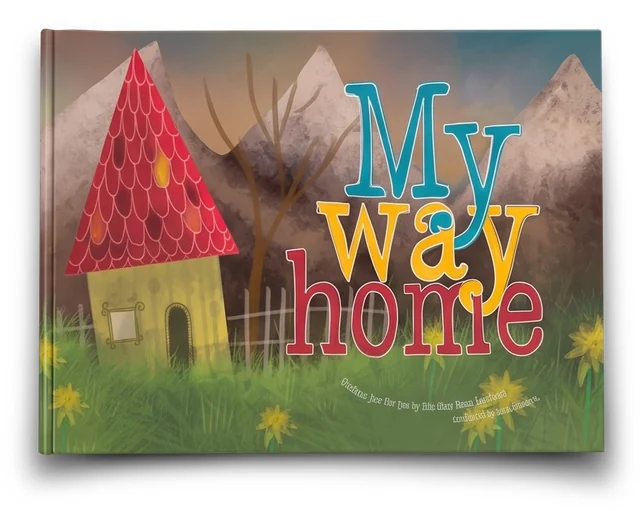
If you’re sending one of our books, choose it together on a call, with a parent helping at their end. My Way Home has 8 characters, so let your grandchild pick theirs. The story sends them around the world, then brings them home to their own town and country at the end. Keep the message in the front a surprise.
Share one thing across the distance
Pick something you can each look at from your own side of the world, then compare notes on the next call.
- The Moon. In the same week, each of you draws the Moon and holds the drawing up on the call. From Australia or New Zealand it looks upside down compared with the UK. That’s because the Moon’s north pole sits at the top from the northern hemisphere, and its south pole from the southern, as The Planetary Society explains.
- The garden on the first of the month. Take a photo of the same spot in your garden on the first of each month and ask for one back. When yours has frost on it, theirs might be in full summer sun.
Keep the parents on side
The parents run the diary at the other end, so ask what works for them and make it easy to say yes.
- We’d ask which day suits, and whether before or after tea is better.
- Keep calls short. You can always ring again on Sunday.
- If a call gets missed, let it go and try the next one.
- Post things that don’t need batteries, assembling or a trip to the shops.
How The Kids Book Company helps
Order from wherever you live and we’ll post the book straight to your grandchild, even when they’re in a different country from your billing address. We ship anywhere in the world, and we print in the UK and now in Australia too. Add a personal message as you order, and we print it into the front of the book for free.
Every title also has a free personalised digital edition through the Free Book Project. It’s a PDF, so you can open it on your own tablet or computer for the next story call. Making one takes under five minutes and no credit card. We’ll ask you to create an account with your email, because that’s how the file gets to you.
Create their free book.
Related questions
How often should long distance grandparents call?
There’s no right number. We reckon a short call at the same time every week beats long ones whenever they fit, because a fixed slot’s easier for everyone to remember. Ask the parents what they can keep up.
What do you talk about with a grandchild on a video call?
With under fives, do something together rather than talk, like singing, a show-and-tell or a story. Older children like a running story, a question to answer or the chance to read to you.
How do you bond with a baby grandchild who lives far away?
Keep calls short, sing the same song each time and use their name. Post things the parents can keep for later, like a book with a message in the front that the baby will read for themselves one day.
What can I post to a grandchild who lives abroad?
Flat, light and unbreakable things travel best: letters, drawings, stickers and books. Check your postal service’s rules for that country before you post anything.